
A long flight can feel shorter when it contains a few different kinds of time: something absorbing, something useful and a genuine opportunity to rest. The difficulty is finding activities that still work with a small tray table, patchy connectivity and interruptions for meals.
The most useful things to do on a plane have a clear starting point and an easy stopping point. A downloaded film, a short writing project or an offline arrival plan fits those conditions; an ambitious workday that depends on reliable Wi-Fi usually does not.
Match the Plan to the Flight
Build the plan around the flight’s timing, not only its length. A daytime journey can leave room for entertainment and a small task, while an overnight flight needs protected rest time rather than a queue of films to finish.
The table offers sample planning options, not rules about sleep or a promise of arriving without fatigue. Meal service, turbulence and individual needs can change the order, so every activity should be easy to pause.
| Flight Length | What to Plan | What to Keep Within Reach | What to Leave Flexible |
|---|---|---|---|
| 4-6 hours | One main film or audio series, followed by a quiet break | Headphones, one downloaded option, a small notebook | Whether a second activity is needed |
| 6-9 hours | Entertainment, a short practical task and a rest period | Offline files, an eye mask, a removable layer | The order around meal service |
| 9-12 hours | A mix of audio, one substantial activity and time for sleep | A compact comfort pouch and charging cable | Work plans if the cabin is busy |
| More than 12 hours | Several different activities with generous unscheduled time | Enough offline variety without packing multiple large devices | The schedule after delays or interrupted rest |
An early arrival also changes what is worth doing before landing. If hotel check-in is later, Qeepl, an international luggage storage service, offers booked storage from US$3.50 per day per item, so a morning plan can include leaving the bags rather than carrying them between stops.
That arrangement belongs alongside the flight plan, not at the end of an exhausted search on arrival. The chosen location’s opening hours, booking details and collection time should fit the onward journey.
Choose Entertainment That Works Offline
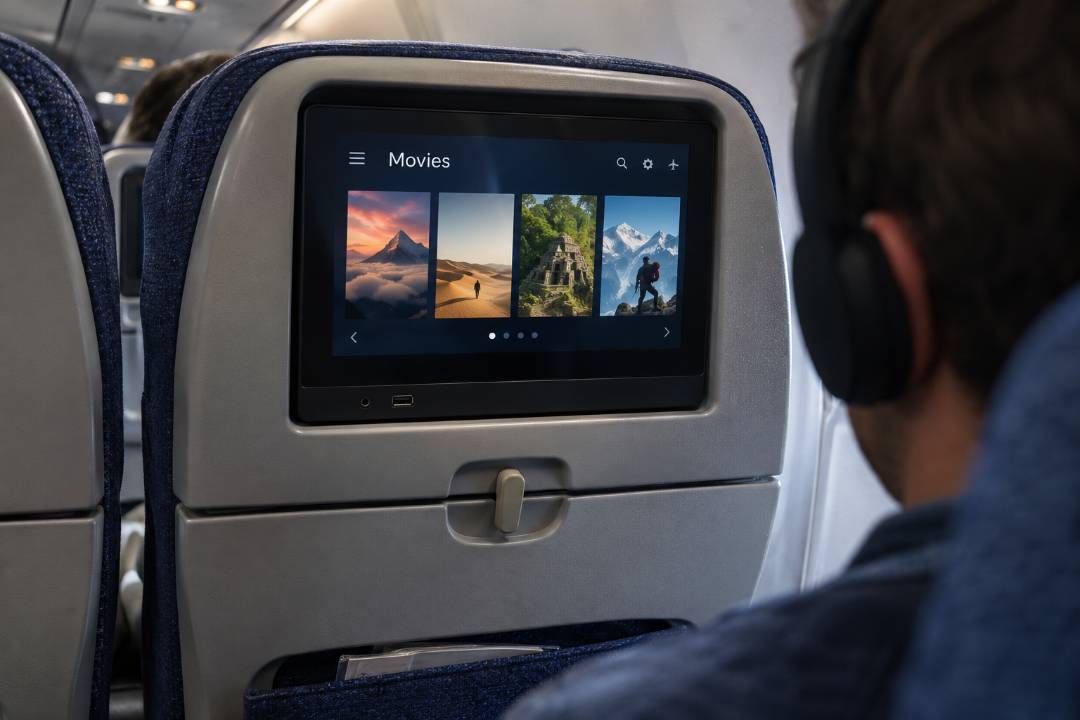
Offline entertainment needs a quick test before departure: open the actual download with the connection switched off. A saved thumbnail or an item added to a watchlist does not necessarily mean the film, episode or audio file is available offline.
Pair a Film With an Audio Alternative
A useful pairing is one film that deserves attention and an audio option for when the screen becomes tiring. For example, a documentary about the destination can be followed by an album or a podcast episode, rather than another film chosen only to fill time.
Some airlines let passengers prepare their onboard choices in advance. Emirates, for example, explains how to create an ice entertainment playlist; this is different from downloading those films to a personal device, so an independent offline backup still helps.
For reading, a small goal makes the activity more engaging: one short story, a chapter with notes or a few pages about a place on the itinerary. An audiobook can cover the same interest when the tray table is occupied or the cabin lights are low.
Give a Small Personal Project a Finish Line
A flight suits projects that are satisfying without becoming urgent. A notebook page called “the first afternoon” can hold a rough walking route, a meal idea and one indoor alternative, with no need to book an entire holiday from the seat.
Another option is an offline photo edit: select a small set from the previous trip, write captions and create a shortlist for an album. A compact language exercise also works better with a specific target, such as recognising station signs or practising a short restaurant conversation.
For companions, a shared puzzle or a handwritten travel quiz can take the place of separate screens. With children, quiet drawing prompts and reusable activities are easier to manage than games with loose pieces; each activity should fit back into its pouch when the crew needs the tray cleared.
Finish One Useful Task Without Building a Workday
The strongest work plan has one offline deliverable and permission to stop. A flight is an unreliable place for a deadline that depends on video calls, cloud access or a large amount of uninterrupted desk space.
Three bounded tasks fit the setting:
- Draft a short document from files already saved locally, leaving fact-checking and links for later.
- Read one downloaded report and write a paragraph of notes, instead of opening a new research trail.
- Prepare the next working day’s priorities, separating the first necessary action from optional tasks.
The preparation matters as much as the task. Files need to open without a company connection, sensitive material should stay off a screen visible to neighbours, and anything essential should already be saved before boarding.
Work can end after the deliverable, even if several hours remain. Switching to audio or quiet rest avoids turning every spare minute into an unfinished obligation; an unavailable internet connection is a reason to change the plan, not to keep refreshing an inbox.
Make Room for Rest and Cabin Breaks
Rest needs a place in the schedule before entertainment expands to fill it. Comfortable layers, headphones and an eye mask may make that period easier; the separate guide to travel clothes for long flights covers what to wear without adding a second packing guide here.
Keep the Rest Plan Simple
When the journey crosses time zones, the intended night at the destination is a useful reference for deciding when to put the screen away. It is not a guarantee of sleeping, and cabin service may leave a shorter window than the flight duration suggests.
Settle the small practical matters first: put the necessary items within reach, clear the tray and save whatever was open. A quiet audio track can be an alternative to another episode, while an unfinished film can wait until a later part of the journey.
If sleep does not happen, a screen-free pause still gives the flight a different pace. There is no need to turn the rest period into another task with a target to meet; the aim is an opportunity to relax, not a fixed number of hours achieved on demand.
Follow the Cabin Rather Than a Rigid Timer
Movement should fit the crew’s instructions and conditions in the cabin. The FAA’s turbulence guidance stresses keeping the seat belt fastened while seated and remaining seated and belted when the sign is illuminated; an activity reminder never overrides that instruction.
When moving around is permitted, a necessary trip to the lavatory can also interrupt a long stretch of sitting. Aisles, exits and galley work areas should remain clear, and stretching should not intrude into another passenger’s space.
Food and drink can provide natural pauses between activities, without becoming a strict onboard routine. This article’s plan is about organising the journey; anyone with individual medical or accessibility requirements should follow the arrangements agreed for the flight.
Pack a Small Long-Haul Activity Kit
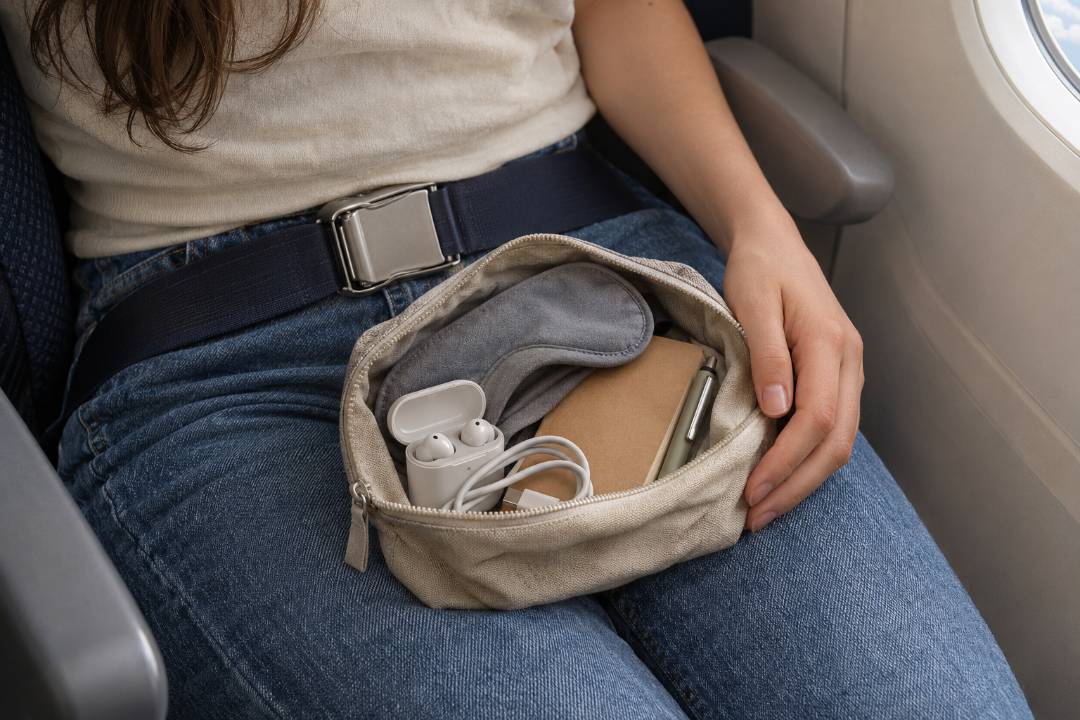
The useful kit is the one that can be reached without repeatedly opening the overhead locker. A single small pouch can hold entertainment essentials, while larger devices stay packed until there is space and permission to use them.
- Headphones that work with the intended device, plus the correct cable or adapter where needed.
- A charged phone or e-reader with downloads tested offline.
- A small notebook and pen for a route, puzzle or short writing task.
- An eye mask and a light layer for the planned rest period.
- A charging cable and any permitted power bank, packed according to the airline’s rules.
- Essential arrival information saved locally, including the accommodation address.
- A reusable pouch so everything can be put away quickly for landing.
The FAA’s battery guidance places spare lithium batteries and power banks in carry-on baggage, with restrictions; airlines can set stricter limits. Carrying a power bank does not automatically mean charging from it is permitted on board, so the carrier’s instructions need checking before travel.
Seat power and connectivity should be treated as useful extras rather than the foundation of the plan. Enough battery for arrival documents matters more than finishing one additional downloaded episode.
Use the Last Part of the Flight to Simplify Arrival
The final activity can be a short arrival check rather than another film started too late. Save the work before the crew begins preparing the cabin for landing, then keep the documents and onward-travel details available.
Make an Offline Arrival Card
An arrival card can be a single note containing the accommodation address, check-in time, first transport step and luggage arrangements. For a journey through Heathrow Airport, for example, the relevant terminal and onward route belong in the note rather than in several browser tabs.
If the next stop is Paddington Station, the note should identify that actual destination and the booking already made, rather than assuming every airport connection follows the same route. Local maps and reservation details need to be readable without airport Wi-Fi.
Keep the First Morning Light
A morning arrival is easier to organise around one simple stop than an ambitious sightseeing schedule. A café near Gare du Nord or a short break near Penn Station can fit between the onward journey and hotel check-in, depending on the actual route.
Luggage collection, border procedures and transport can take longer than expected, so a fixed attraction booking immediately after landing leaves little margin. Hotel access should be based on a confirmed check-in time or an agreed early arrival, not on the flight’s morning landing alone.
Before devices are put away, the useful final check is practical: documents accessible, arrival address saved and the next necessary step clear. The remaining activities can stay unfinished until the next journey.