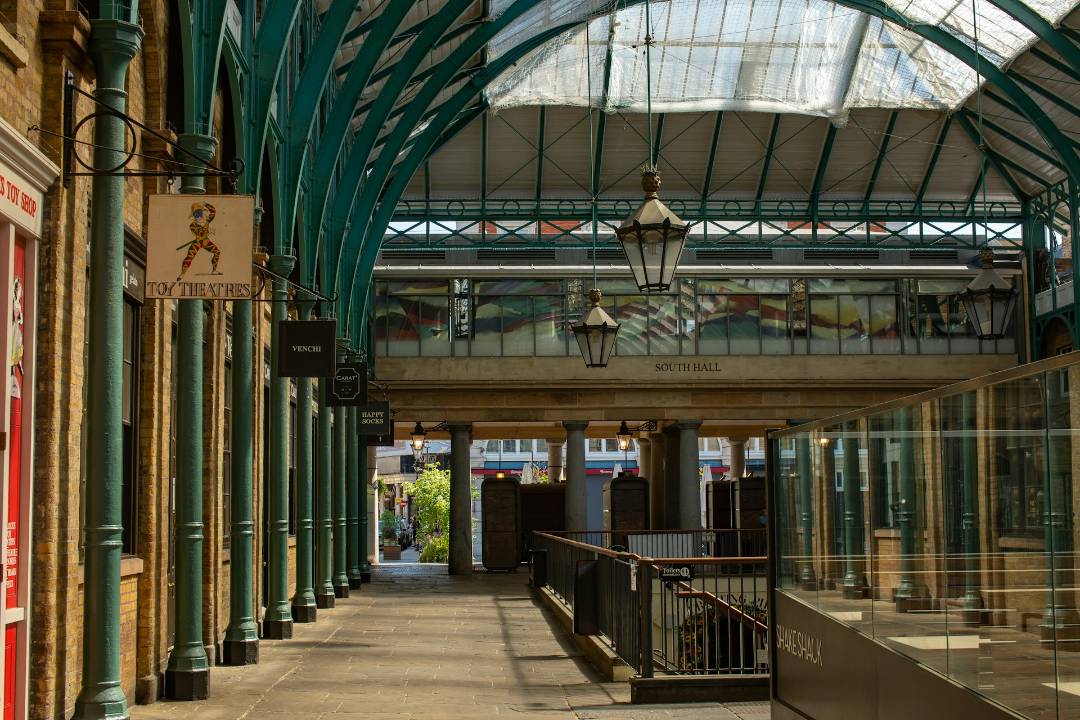

Covent Garden stands as one of London’s most iconic and vibrant districts, a major hub of culture, shopping, dining, and entertainment in the heart of the West End. For many first-time visitors to the city, the historic Piazza is one of the area’s best-known attractions. Once home to London’s major fruit and vegetable market, Covent Garden was redeveloped in the 1970s and reopened in 1980 as a speciality shopping destination. Its cobbled Piazza, historic Market Building, shops, restaurants, and street entertainment continue to attract visitors throughout the year. Before you dive into the attractions, it’s practical to consider your belongings. Navigating crowded spaces with heavy bags can be inconvenient, which is why using luggage storage Covent Garden offers can make exploring easier. Additionally, there are Covent Garden storage points where you can securely store your luggage and wander the Piazza hands-free.
Upon stepping into Covent Garden, visitors are greeted with a mix of markets, shops, restaurants, and entertainment. The Apple Market, inside the Market Building, sells antiques and collectables on Mondays and handmade jewellery, prints, watercolours, and crafts from Tuesday to Sunday. The East Colonnade Market operates throughout the week and features stalls selling items such as handmade soap, jewellery, handbags, sweets, artwork, and homeware. Nearby, Jubilee Market hosts antiques and collectables on Mondays, a general market from Tuesday to Friday, and arts and crafts on Saturdays and Sundays. The Piazza is also famous for its street performers. Surrounding this central hub are the Royal Opera House, the London Transport Museum, and streets lined with boutiques, independent shops, restaurants, cafes, and historic pubs.
Covent Garden Bag Policy
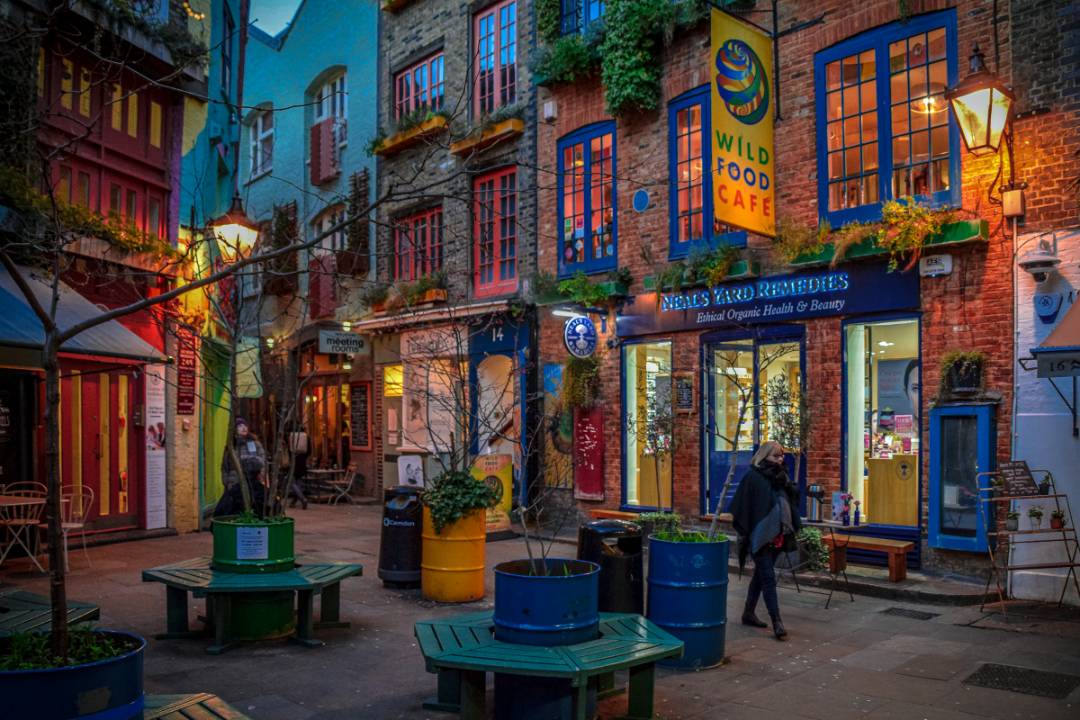
Covent Garden is a large public district rather than a single ticketed venue, so there is no general Covent Garden-wide bag-size policy for people walking through the Piazza, Market Building, and surrounding streets. Rules can change once you enter individual theatres, museums, attractions, restaurants, or event spaces.
For example, the Royal Opera House currently carries out bag checks on entry. Larger bags, suitcases, and backpacks are not permitted in its theatres or on tours and must be left in its complimentary cloakrooms, which are available to ticket holders and tour guests. Other venues in the area may apply different rules, so check the requirements of any attraction or performance you plan to visit.
Types of Bags Allowed
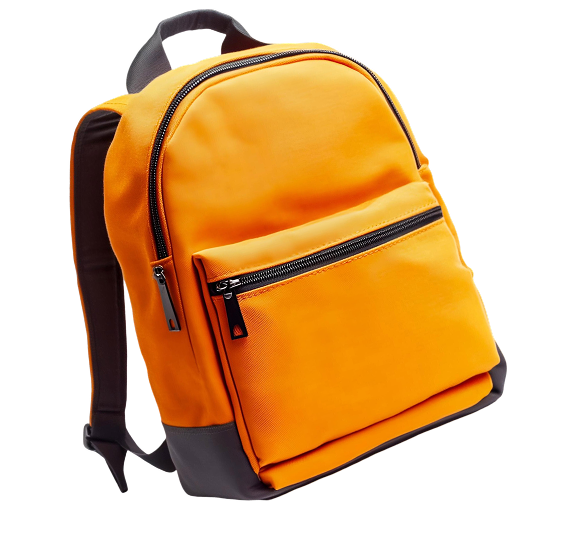
In the public areas of Covent Garden, ordinary handbags, backpacks, tote bags, cross-body bags, shopping bags, and luggage are not subject to a published universal size limit simply for entering the district.
There is no general rule requiring bags to be smaller than A4 paper or to measure less than 40cm x 30cm x 20cm. Those dimensions should not be treated as a Covent Garden-wide standard.
If you are attending a theatre performance, museum, tour, or other ticketed attraction, however, check that venue’s current bag rules before arriving. Bringing a compact bag can still make it easier to move through crowded streets, shops, and markets.
Types of Bags Not Allowed
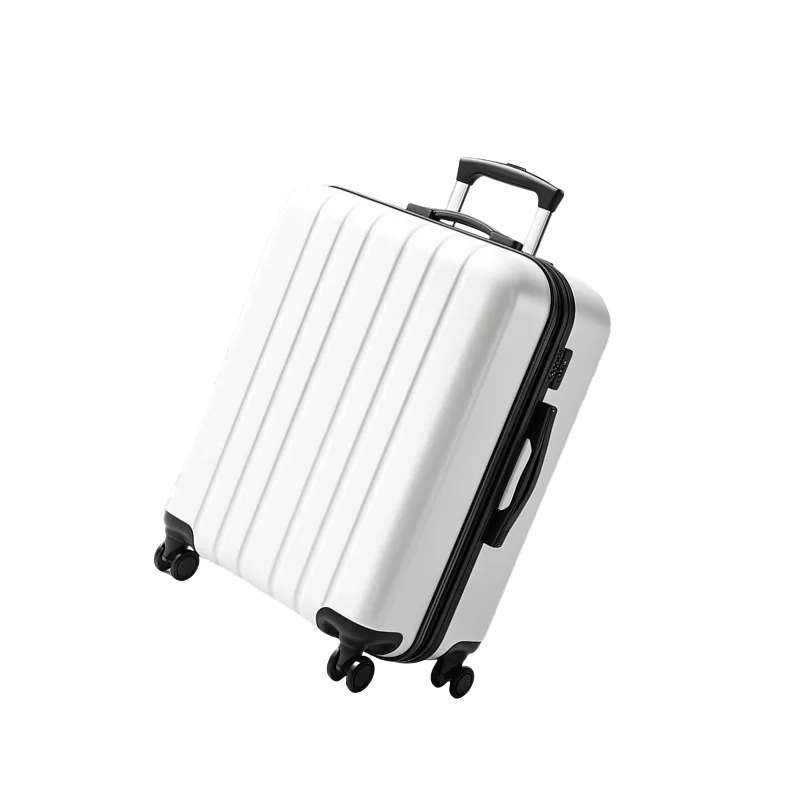
Covent Garden does not publish a blanket rule prohibiting suitcases, wheeled luggage, large backpacks, or oversized holdalls throughout the public Piazza and Market Building solely because of their size.
Individual venues may be much stricter. At the Royal Opera House, for example, larger bags, suitcases, and backpacks must be checked into the complimentary cloakroom before entering the theatres or joining a tour. All bags are currently subject to security checks on arrival.
If you are carrying large luggage and plan to visit several attractions, storing it beforehand can still be more practical than checking the rules of each venue separately.
Covent Garden Lockers
Covent Garden’s current official visitor information does not list a general public luggage-locker or left-luggage facility in the Market Building or Piazza.
Some individual venues have cloakrooms, but these should not be treated as public luggage-storage services. For example, the Royal Opera House cloakrooms are for people attending a performance or tour, and larger bags, suitcases, and backpacks must be checked there when visiting those activities.
If you arrive in Covent Garden with a suitcase or other travel luggage, an off-site Covent Garden luggage storage service can therefore be a practical alternative. These services use locations in and around central London where travelers can leave bags before sightseeing.
Covent Garden Transportation
Reaching Covent Garden is straightforward thanks to its Central London location and extensive public transport connections. The closest London Underground station is Covent Garden station on the Piccadilly Line, about a one-minute walk from the Market Building.
Covent Garden’s official visitor information notes that there are 193 steps between the platforms and street level if you use the stairs, so passengers are advised to use the lifts. The station can become very busy, and during peak periods Covent Garden specifically recommends Leicester Square station, served by the Piccadilly and Northern Lines, which is about a five-minute walk away.
Other nearby stations include Charing Cross, around a six-minute walk away, and Holborn, around a ten-minute walk away. Tottenham Court Road and Embankment are also within walking distance.
For those who prefer to travel above ground, several bus routes serve the surrounding area. Covent Garden’s current official transport information highlights routes 9, 13, 15, 23, 139, and 153, which stop around Trafalgar Square and Aldwych. Other nearby stops may be served by additional routes, so check the current TfL journey planner for the best option on the day.
If you are arriving in London by mainline rail, Charing Cross is one of the closest railway stations to Covent Garden. Waterloo is another nearby mainline option, while Tottenham Court Road provides access to the Elizabeth Line.
Covent Garden Camera Policy
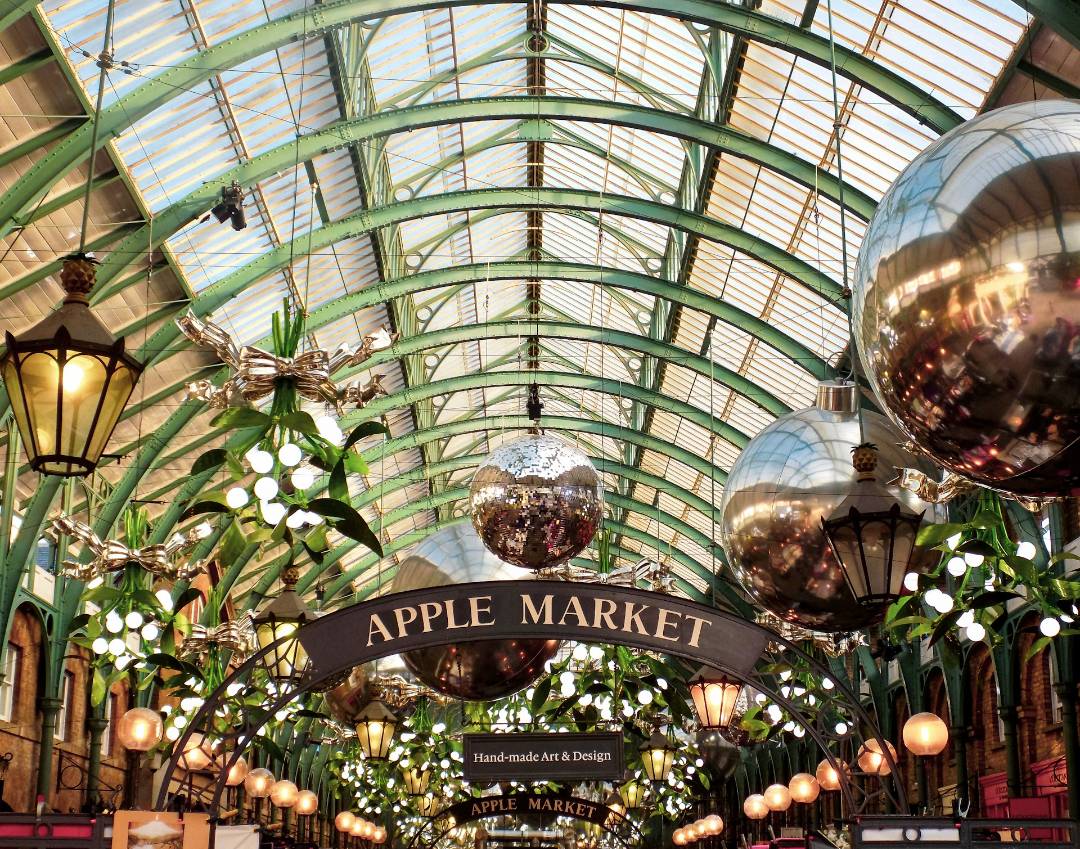
Covent Garden does not publish a blanket ban on ordinary personal photography in the public Piazza, markets, and surrounding streets. Visitors commonly take photographs of the architecture, shops, markets, and street entertainment.
However, organised, professional, or commercial filming and photography should not be treated in the same way as casual personal photos. Covent Garden’s official visitor information states that filming requires permission, and the estate provides a dedicated contact for filming and photography enquiries.
There is no published Covent Garden-wide rule stating that all tripods, monopods, external lighting, or professional cameras are automatically prohibited throughout the entire district. Larger shoots or equipment that affects public space should be cleared with the Covent Garden management team in advance.
Photography rules also vary inside individual venues. At the Royal Opera House, photography and filming are prohibited during performances in all auditoriums, while visitors may take photographs elsewhere in the building and before performances. Commercial photography and filming require prior agreement.
When photographing street performers, giving a contribution after watching a show is customary and appreciated, but it should not be presented as a mandatory photography fee.
Covent Garden Food Policy
Covent Garden is one of London’s major dining destinations, but there is no published district-wide ban on visitors carrying or eating ordinary personal food and non-alcoholic drinks in the public Piazza.
Restaurants, cafes, pubs, bars, theatres, and other private venues can set their own rules regarding outside food and drink. You should therefore not assume that food purchased elsewhere can be consumed at a restaurant table or inside a ticketed attraction.
At the Royal Opera House, only food and drink purchased from its Ground Floor Café or bars may be consumed on-site. Inside its auditoriums, only bottled water and ice cream are permitted.
Alcohol is subject to additional restrictions in public spaces. Westminster City Council’s current On-Street ASB Public Spaces Protection Order, which came into force on February 25, 2026, lists street drinking as a prohibited activity. Licensed restaurants, pubs, bars, and authorised outdoor seating areas operate under their own licensing conditions.
Other Covent Garden Rules & Information
Accessibility is available across much of the Covent Garden estate, although its historic layout and cobbled surfaces can make some routes less straightforward. Covent Garden’s official visitor information states that there are wheelchair-accessible routes around the area, with one of the smoothest approaches to the Market Building from Russell Street, where ramps are available, and from the bottom of James Street.
Accessible toilet facilities are also available, including a disabled toilet in Tavistock Court beside Jubilee Market.
Covent Garden Underground station has lifts, but travelers who require a completely step-free journey should check the current TfL step-free journey planner and station information before travelling rather than assuming that every part of the route is step-free.
Smoking is prohibited inside enclosed shops, restaurants, theatres, and other indoor public premises under the applicable rules. Individual venues may impose stricter policies. The Royal Opera House, for example, prohibits both smoking and vaping anywhere on its premises. In the Market Building and outdoor Piazza, follow current signage and instructions from estate staff.
As with any busy tourist area, keep an eye on wallets, phones, shopping bags, and other personal belongings, particularly in dense crowds.
Cards and contactless payments are widely accepted across Covent Garden, but payment methods can vary between individual market traders, street performers, shops, and restaurants. It can still be useful to carry more than one payment option rather than assuming every stall is either cash-only or completely cashless.
Tips for Visitors
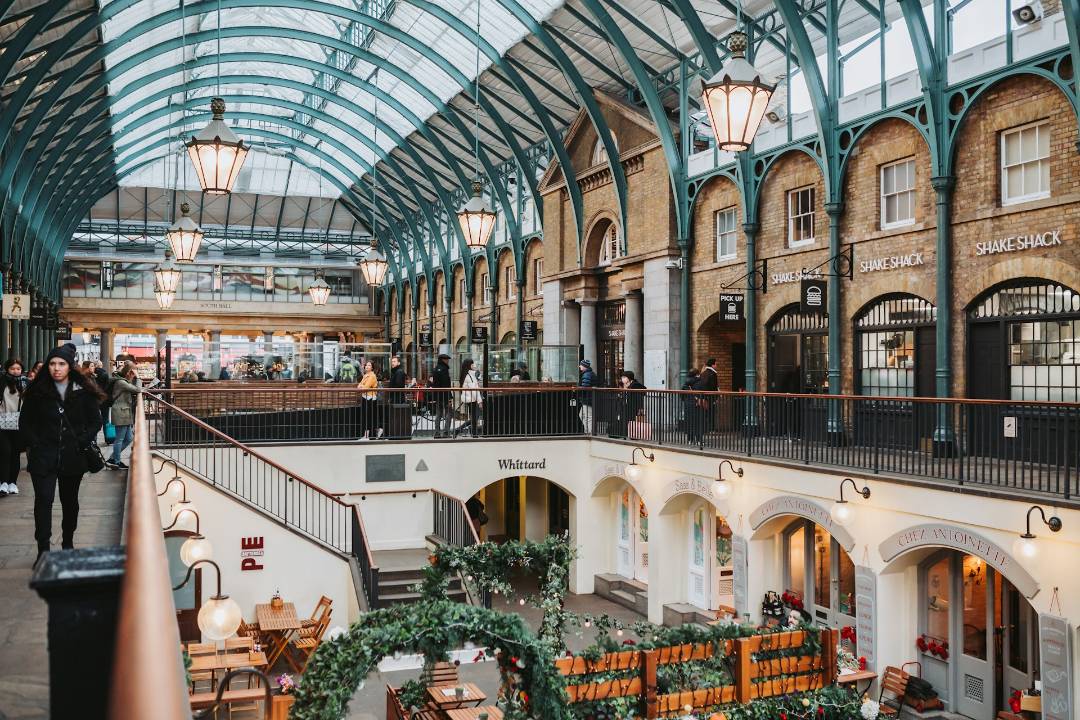
For the most current information, check the official Covent Garden website. Before you visit, it is useful to check current opening times, the shop and restaurant directory, market information, transport guidance, and scheduled events. Seasonal installations, pop-ups, and performances can change throughout the year.
To maximize your comfort and mobility, travelling light can make navigating the busy Piazza, markets, and shops easier. However, Covent Garden itself does not have a general rule requiring a small clutch, transparent bag, or a bag below a specific size. Instead, check the bag policy of any theatre, museum, or other attraction you plan to enter.
Don’t let cumbersome luggage or oversized shopping bags dictate your day. Instead of heading back to your hotel or carrying luggage through the crowds, you can use Qeepl. Qeepl luggage storage near Covent Garden lets you arrange storage before exploring the area. Storage costs £3.69 per item per day, and luggage is protected by insurance coverage of £1,000.
FAQ
Where can I store my luggage for a few hours in London?
Covent Garden’s official visitor information does not list public luggage lockers in the Market Building or Piazza. You can instead use a nearby commercial luggage-storage service such as Qeepl or another left-luggage provider in Central London. Qeepl storage costs £3.69 per item per day, and luggage is protected by insurance coverage of £1,000.
Will a hotel hold my luggage if I’m not staying there?
It depends on the hotel. Some hotels only store luggage for current or departing guests, while others may participate in third-party luggage-storage networks or offer storage to non-guests for a fee. Contact the hotel directly before relying on this option. A dedicated luggage-storage service is usually a more predictable choice if you are not staying at the property.
How much do luggage lockers cost?
Prices vary substantially by provider, location, storage duration, and bag size. Covent Garden itself does not publish a price for public luggage lockers because its official visitor facilities do not list a general public locker service in the Market Building or Piazza. Check the current price shown by your chosen storage provider when booking rather than relying on a fixed London-wide rate.
Do I need to book luggage storage in advance?
Not every luggage-storage service requires advance booking, but availability can be limited in busy Central London locations. If your chosen provider accepts online reservations, booking ahead can help ensure that the selected location has space when you arrive.
Are luggage storage lockers safe?
Security arrangements vary between providers, so check how the specific service stores bags, whether the location is staffed or monitored, and what liability or insurance coverage is included. With Qeepl, the applicable insurance coverage is shown as £1,000 and should be checked together with the current booking terms.
Can you leave your luggage at the airport in London?
Yes. Heathrow Airport currently offers staffed left-luggage services operated by Excess Baggage Company across its terminals, with both short- and long-term storage available. Gatwick Airport also has staffed Excess Baggage Company luggage-storage facilities before security in both the North and South Terminals. Gatwick specifically states that it does not provide self-service luggage lockers for security reasons. Airport storage can be useful if you are returning to the airport, but a Central London storage point may be more convenient if you plan to spend the day sightseeing.